• Skip to main content
  • Skip to primary sidebar
Logo_1
  • Home
  • Workshops
  • Blog
  • About
  • Contact

pause

Cooling Off in the Heat of the Moment

June 19, 2017 by Terre Passero Leave a Comment

Finding calm amidst irritation, stress, or anger is challenging, but crucial for preventing relationship strain and project disruptions. Emotional regulation is key, enabling us to navigate intense moments skillfully and repair potential damage. In this blog, I introduce the POP Stress Now™ method – Pause, Observe, Proceed – as a quick and effective way to cool down and respond thoughtfully.

The Impact of Overwhelm

When overwhelmed, our cognitive functions (reasoning, concentration, discernment) suffer, making regrettable actions more likely. Whether it’s an outburst or a subtle gesture, these missteps can hinder trust and communication, affecting individuals, groups, and teams. So, before you say something you regret, or send an email you wish you could retrieve, or otherwise do something that hinders connection and trust, practice POP — Pause, Observe, Proceed – and avoid long-term negative consequences.

Mastering Emotional Regulation: A Guide to the POP Stress Now™ Method

This 3-step POP process can take as little as 30 seconds. And you can do it right where you are. It calms the nervous system that is naturally activated when we’re agitated, stressed, overwhelmed.
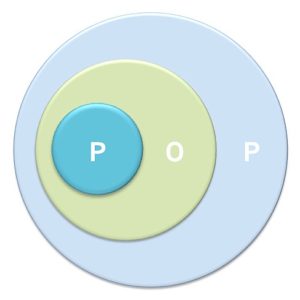
POP Stress Now: Pause, Observe, Proceed


  1.  PAUSE: Stop, take a moment, and become aware of your breath. Sense the breath moving in and out of the body. Three cycles of breath can help calm the nervous system.
  2. OBSERVE: Notice thoughts, feelings, and bodily sensations. Tend to what you notice with curiosity and kindness. Acknowledge and “name it to tame it,” following Dr. Dan Siegel’s advice.
  3. PROCEED: With a bit more connection, take the next step. It can be anything — responding to someone, working, eating, exercising, prioritizing your to-do list, getting a cup of tea, continuing to sit quietly, or whatever you decide is best for you now.

Try this POP Stress Now Recording!


Versatility of POP

POP isn’t just for heated moments; it’s a valuable tool for pre-meeting preparation, difficult conversations, presentations, or post-upset calming. You can even use it after moments of success or pleasure to fully savor the experience.

Practice a few times a day so it’s a familiar go-to tool. As you get more comfortable with it, you will be able to access it more easily during those inevitable heated moments.


Practical Application: My POP Story

A personal anecdote illustrates the power of the POP method. Feeling excluded from a crucial meeting, I was angry and hurt and on the verge of a confrontation. Through POP, I paused, acknowledged my emotions, and decided to take the classic “sleep on it” tactic. I decided to wait until the next morning to calmly talk with him. When the next morning arrived, however, I’d received his invite with an apology for inadvertently leaving me off the initial invitation. If I’d reacted the day before from my initial response of anger and hurt, the exchange would have been quite different.

______________________________________

Let’s Connect

  • Workshops for you and your Organization
  • Schedule a free 20-minute Chat with Terre Passero, founder of Mindful Stress Management
  • YouTube for guided mindfulness practices and talks about stress, the brain, and the body
  • LinkedIn

Filed Under: Blog Tagged With: emotional regulation, Mindfulness, pause, relaxation response

4 Ways to Sharpen Focus

August 8, 2016 by Terre Passero Leave a Comment

The physical body can only be in the present moment, with its immediate sensations, aches, pains, joy, sizes and shapes. The body cannot wander to the past or jump to the future (unless you’re a superhero; in which case, you’re probably not reading this post. :))

The mind, on the other hand, time travels all day long — from the present to the past and future, over and over and over again. We’re often rehashing dialogues and experiences from the past or we’re rehearsing for experiences we anticipate having in the future. (Have you ever replayed a conversation in your head and thought about what you should have, could have, would have said?)

While self-reflection and preparation are essential, a distracted mind can have a negative impact on a critical conversation, meeting, or activity. Are you where you say you are?

So when you notice you’re distracted or on autopilot, you can reset and recharge by bringing your attention to the breath moving in and out of the body. This helps anchor your attention to the situation or task at hand, so you can attend to it more skillfully. A few cycles of conscious breathing allows oxygen to flow more easily throughout the body and carbon dioxide to be expelled. This prompts the relaxation response, a key component to support stress resilience. Harvard Health Publications writes:

“Shallow breathing limits the diaphragm’s range of motion. The lowest part of the lungs doesn’t get a full share of oxygenated air. That can make you feel short of breath and anxious.”

Try a One-Minute Pause below 1x/day for a week. Sharpen your Focus.

Practice 1: Conscious Breathing: Sit upright, comfortably, at your desk or wherever you can be quiet for 1 minute. Guide your awareness to rest on the breath moving in and out of the body. No need to change the way you breathe. Simply feel the breath moving in and out of the body, sensing the breath at the tip of the nose, in the movement of the chest or the belly. Try this for 3-5 full cycles of breath.

Practice 2. Slow Exhalation: Inhale slowly and deeply through the nose, and exhale slowly through the mouth. Think of smelling a flower on the inhalation and blowing out a candle on the exhalation. Do this for 3 full cycles of breath.

Practice 3. Stretching Pause: Raise your arms up in the air and hold them above your head in a V shape. Feel your feet on the ground, the stretch, and your breath moving in and out of the body. Breathe in and out for 5 cycles of breath. Slowly lower your arms, and feel any sensations in the body.

Practice 4. Before a Meeting Pause: Try this when you sit down to a team meeting, or you are distracted or unfocused during a meeting. Take a moment to bring your awareness to your body. Simply sense the contact of your feet on the floor, your body in the chair, your hands on the table, chair, or lap. Feel the air on your skin. Notice any sensations in the body — pleasant, unpleasant, or neutral. Acknowledge any thoughts and emotions.

_____________________________

To learn more:

  • Workshops and 1:1 Coaching for you and your Organization
  • Schedule a free 20-minute Chat with Terre Passero, founder of Mindful Stress Management
  • YouTube for guided mindfulness practices and talks about stress, the brain, and the body
  • LinkedIn

Filed Under: Blog Tagged With: mindful awareness, Mindfulness, pause, stress management, stress reduction

Primary Sidebar

Blog Posts

  • Sleep Tips: Simple Habits for Better Sleep August 25, 2026
  • Not All Amputations Are Physical: Healing Emotional Pain July 26, 2025
  • Managing Election Stress: Meet the Moment With Care November 15, 2024
  • Reflect and Reset January 20, 2022
  • Same Storm, Different Boat July 3, 2021
  • How to Change Your Relationship to Stress November 3, 2020
  • 4 Steps to Manage Stress February 26, 2020
  • Season’s Greetings December 18, 2019
  • 7 Life Lessons from my 98-year-old Mother November 30, 2019
  • Recharging the Brain and Body September 14, 2019
  • Mindfulness: 3 Common Misconceptions June 5, 2019
  • Holiday Stress Busters: 5 Tips November 8, 2018
  • Practice the Relaxation Response October 12, 2018
  • Living a Dynamic Life September 7, 2018
  • The Power of Breath August 8, 2018
  • 3 Benefits of Mindfulness June 8, 2018
  • 3 Tips to Manage Stress November 22, 2017
  • Kindness and Compassion September 1, 2017
  • Cooling Off in the Heat of the Moment June 19, 2017
  • Getting to Know your Stressors October 27, 2016

Sign up for free ebook: POP Stress Now

Be Inspired

"You can't stop the waves, but you can learn to surf."

—Jon Kabat-Zinn

"Follow effective action with quiet reflection. From the quiet reflection will come even more effective action."

—Peter Drucker

With mindfulness we are "developing a mind that can walk evenly over uneven ground."

—Rick Hanson

“Most people do not listen with the intent to understand; they listen with the intent to reply.”

—Stephen R. Covey

"The quieter you become, the more you are able to hear."

—Rumi

"Wherever you are is the entry point."

-Kabir

Free POP Stress Now™ ebook!

Subscribe to receive practical tips, updates, and inspiring blog entries about stress management.

  • This field is for validation purposes and should be left unchanged.

Stay Connected

Stay in touch on LinkedIn, Facebook, Instagram, or YouTube.

© 2017 Mindful Stress Management. All Rights Reserved. Design by TWK Web and Print Design