• Skip to main content
  • Skip to primary sidebar
Logo_1
  • Home
  • Workshops
  • Blog
  • About
  • Contact

Uncategorized

Not All Amputations Are Physical: Healing Emotional Pain

July 26, 2025 by Terre Passero Leave a Comment

Some wounds are visible. Others stay hidden. Both change how we move through the world.

My brother was hit by a truck at the young age of 24. I was 16. We didn’t know if he would survive.

During his three-month stay in the hospital, his leg was amputated below the knee. When he was finally discharged, he came back home to recover. “Home” at the time was mom, dad, and 4 of his youngest siblings, including me.

Recovery

He couldn’t walk—not only because he’d lost a leg and didn’t yet have a prosthetic, but also because his other leg was still healing from multiple fractures. How did he get around? Sometimes in a wheelchair, but at home, his main mode of transportation became a 4-wheeled scooter he could sit on and push himself across the floor with his arms.
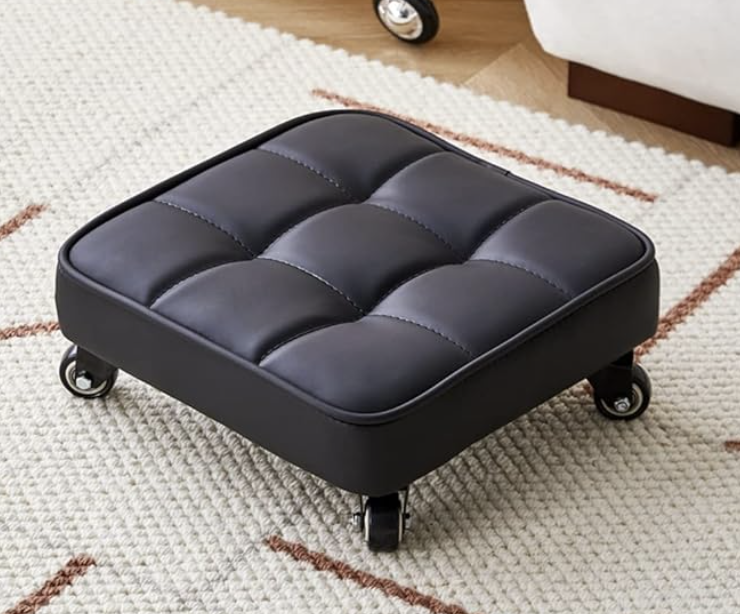
Over time, his residual limb healed enough for him to be fitted with a prosthetic. He learned to walk again with this foreign attachment. Over the next few years, he not only adjusted to the loss of his limb, but he went back to school, became a prosthetist, and eventually opened a successful prosthetics business —along with several related businesses.

What does a physical amputation have to do with emotional pain?

Watching my brother heal — physically, mentally, emotionally — helped shape the way I understand human resilience. And it gave me a metaphor that continues to influence my own healing and my work in mindfulness and stress management.

I believe we’ve all experienced some kind of amputation in life — not necessarily the loss of a limb, but a loss just as real: a betrayal, an injustice, the loss of someone we loved, or even the painful shedding of a part of ourselves.

Whatever the amputation, I don’t think it ever fully disappears.

My brother’s leg will never grow back, of course, but he’s learned to live with its absence. Most days, it appears that he moves through the world with ease. He takes off his prosthetic before bed, puts it back on in the morning, and goes about his life.

But not every day is smooth. Sometimes there are complications. There may be a sore at the end of his residual limb making the prosthetic painful or impossible to wear. Sometimes, he needs to be refitted for a new one because his body changes or the technology improves.

I don’t think our personal amputation — whether emotional or physical — ever truly vanishes.

Yes, we may heal. There may be mending. There may even be growth and a renewed sense of awareness. But the scar remains. Some days, it’s just a faint echo in the background. Other days, it moves into the foreground — tender, aching, raw.
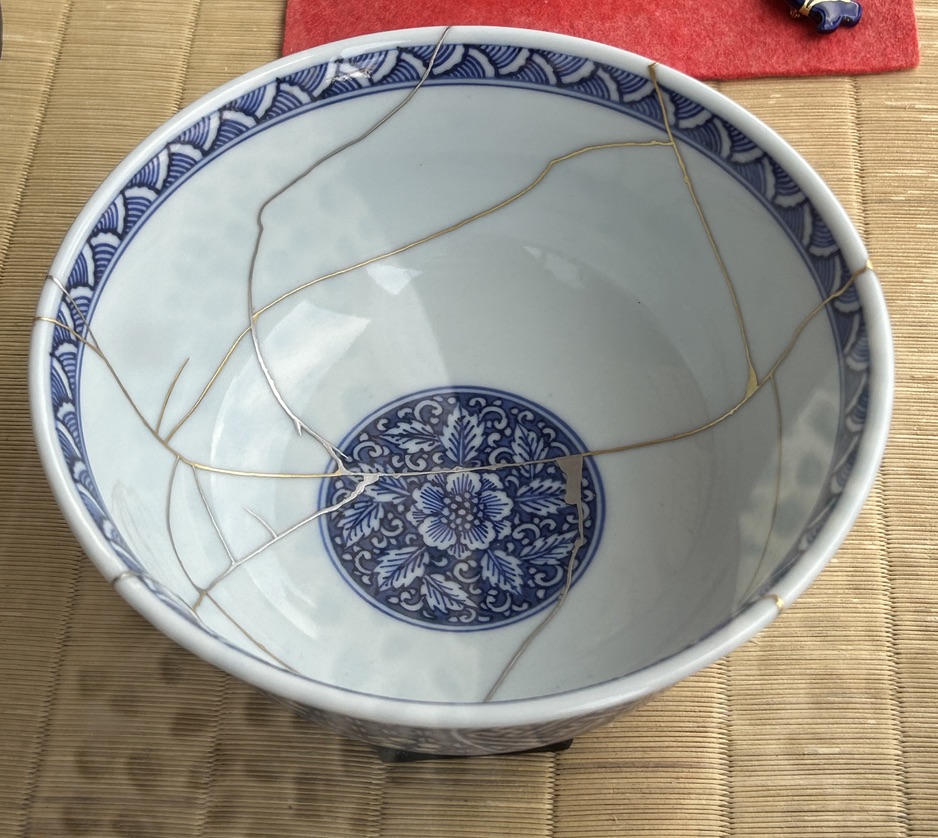
japanese bowl that's been repaired with gold - kinsugi in japanese

This healing process reminds me of kintsugi, the Japanese art of repairing broken pottery with gold. Instead of hiding the cracks, it highlights them, revealing a new kind of beauty in imperfection.

The Deeper Lesson

My brother can look at his leg and see that a portion is missing. But emotional amputations aren’t as visible. We can’t see the scar or the wound — and others can’t see it either. That makes it harder to explain why we’re “limping” (struggling in life) or why we suddenly need something we can’t quite put into words.

But deep down, we know. And if we don’t know, we can learn. We can become familiar with our own inner signals—listening to the subtle cues in our body, feelings, and thoughts—and gently ask, “What do I need now?”

This is where Mindful Stress Management helps.

It teaches us to notice early signals and respond with compassion, rather than ignoring them until the pain grows louder.

When pain flares, it’s a call to slow down and tend to ourselves. And when we’re moving with more ease, we can pause and be grateful for that moment of grace.

We all carry wounds. Learning to live with them isn’t about “fixing” ourselves—it’s about walking with more steadiness, compassion, and understanding.

I know when I’m overly critical or unusually impatient, it’s a sign my own “residual limb” needs care. The cues can be subtle, but if I dismiss them—like snapping at someone in traffic—they only grow louder.

The betrayal I experienced—my personal amputation—hasn’t disappeared. It no longer cripples me or makes me want to hide, but I still must tend to it when it aches.

Our relationship with grief, betrayal, or heartbreak shifts over time. We grow. We adapt. We learn to walk a little differently through life.

We all carry something. With practice, we can carry it more lightly. Just as my brother removes and reattaches his prosthetic each day, we too can tend to our invisible wounds—again and again.

So I leave you with this question:

What unseen wounds are you carrying? And what small act of care can you offer yourself today? Even the smallest act of tending can make the journey feel a little lighter.

**********

To learn more and stay in touch:

  • Workshops for you and your Organization
  • Schedule a free 20-minute Chat with Terre Passero, founder of Mindful Stress Management
  • YouTube for guided mindfulness practices and talks about stress, the brain, and the body
  • LinkedIn

Filed Under: Uncategorized

Managing Election Stress: Meet the Moment With Care

November 15, 2024 by Terre Passero Leave a Comment

Elections can bring up a mix of emotions—disappointment, relief, anger, uncertainty, or celebration. Whatever you’re feeling, this can be a time to meet the moment with care.

Pause and pay close attention to how you feel. Are you irritable? Angry? Overwhelmed? The first step is to recognize and name what’s here—not to deny it. Meet the moment. Notice any body sensations: Are your shoulders tight? Is your stomach unsettled? Do you feel your breath in the chest, the belly? Acknowledge it all with care and curiosity.

Tend to what might support you: exercise, a talk with a friend, music, a good cry, a laugh, a deep breath, a walk in nature, a cup of warm tea, a rest. What might help soothe your nervous system? Calming your body and mind doesn’t deny your feelings; it prepares you to respond with clarity and wise action. The more we can self-regulate, the more resilient we are.

Self-Care During Times of Stress isn’t just a personal act—it sets the tone for those around us. As leaders, your mindset impacts your team, and the culture you create can provide much-needed support.

Responding With Clarity and Compassion

In uncertain times, simple practices like listening more deeply, speaking with kindness, and showing compassion can help us move forward with greater clarity and intention.

Today, let’s choose to bring awareness and kindness to our interactions, to meet ourselves and each other with patience and respect. (Note: this does not mean complacency.)

I’m here to support you and your organization with resources and ideas to cultivate resilience and well-being in your workplace, especially in these challenging times.

Together, let’s take one intentional step at a time.

Thank you for your time and for sharing this message with anyone who might benefit.

Warm wishes, 

Explore How Mindful Stress Management Can Support You

As leaders, our actions ripple through our teams and communities. Creating a supportive environment is more important than ever. That’s why I’m committed to providing simple, practical tools for managing stress and enhancing resilience—so you and your team can meet every moment with clarity and compassion.

BROWSE WORKSHOPS

Filed Under: Uncategorized

Reflect and Reset

January 20, 2022 by Terre Passero Leave a Comment

We’re a few weeks into 2022 and it’s not too late to reflect on your growth and learning over the past year. It can fuel you for the year ahead, reminding you of your strengths, values, and resilience. You’ve got this!

Reflection Writing Practice

Give yourself time to pause, inquire, feel, write. Use a pen, a colored marker, a crayon, a digital device – whatever works for you. Respond to one or more of the prompts below. Allow and explore whatever emerges as you write. Write for yourself, not with the intention to post or polish. And always, invite compassion for yourself.

Consider These Questions

  • What stood out for you last year?
  • What did you do well?
  • What gave you joy?
  • What illuminated insight?
  • How did you deal with challenges, with suffering?
  • What do you want to continue (or start) cultivating and nurturing in the new year? It may be an action or it may be a feeling.

Go easy on yourself. Be kind. These past couple of years have been unlike any we’ve experienced.

_______________

To learn more:

  • Workshops and 1:1 Coaching for you and your Organization
  • Schedule a free 20-minute Chat with Terre Passero, founder of Mindful Stress Management
  • YouTube for guided mindfulness practices and talks about stress, the brain, and the body
  • LinkedIn

Filed Under: Uncategorized

Same Storm, Different Boat

July 3, 2021 by Terre Passero Leave a Comment

The following quote has helped strengthen my compassion for people and is a reminder that we all manage stress in different ways. I came across it in early 2020 as stay-at-home orders due to COVID-19 started hitting around the globe.

“We’re in the same storm, but in different boats.” (source unknown)

It has reminded me to meet each person where they are and to listen closely to what people have experienced, knowing their experience may be quite different from my own. Through my work, I’ve heard a lot of stories about grief, transition, loss, fear, isolation, increased job demands. Most of the world has been through a time of chronic stress as well as a time of deep reflection and change. It has taken an enormous emotional toll and affected people’s mental health.

In the past year alone I have led over 100 virtual workshops, courses, and 1:1 coaching helping people work through the changes and uncertainties of the pandemic. My training and work with Mindful Stress Management has sharpened my ability to help others deal with mental health, burnout, anxiety. And it has helped me personally move through the pandemic.

Though stress is a natural part of life, we can change our relationship to stress. It is not going away. As long as we’re alive stress is a companion – helpful at times and overwhelming at times.


So how are you?

How have you moved through these past 15+ months? As we continue to adjust and move forward in new ways, what are you and your organization most concerned about?

Questions to Consider as You Move Forward

  • How has the pandemic impacted your life and work?
  • What is your go-to activity to help deal with stress?
  • Name what you have learned during the pandemic that will stay with you.
  • Consider what your biggest concern is now as we reconstruct our work, workplace, and relationship with work?

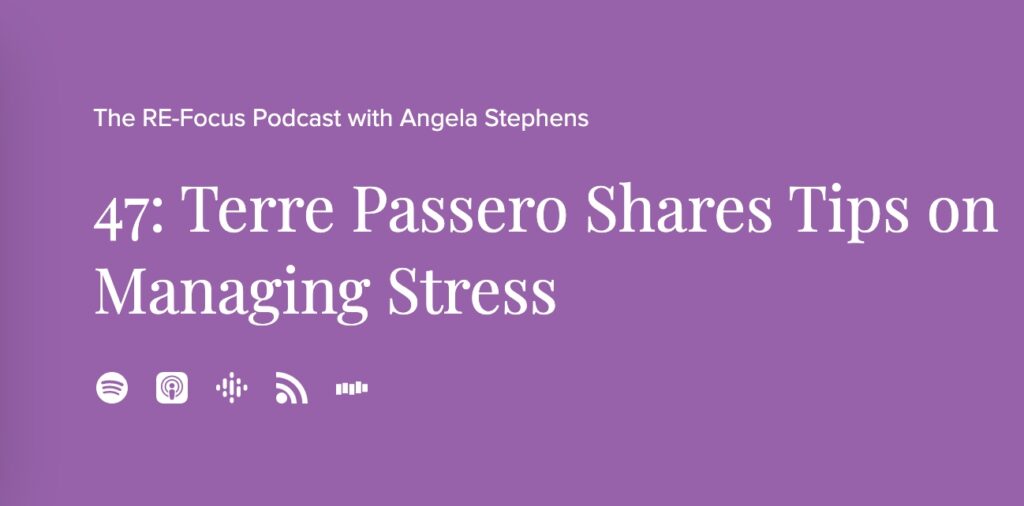
Listen to a Podcast Interview with Terre: Tips on Managing Stress

I had the pleasure to be a guest on the ReFocus podcast with Angela Stephens. You can listen and jump to what interests you.

Podcast: Terre Passero Shares Tips on Managing Stress
https://www.refocuswithangela.com/podcast-1/episode/51465c22/47-terre-passero-shares-tips-on-managing-stress

Overview:

2:20: What is mindfulness?
5:50: Changing your relationship with stress
7:00: Acute vs chronic stress
11:30: Breathing tip to calm the nervous system
13:50: Mindful, heartful listening
18:15: Fab 5 – Practices for the brain and body
23:00: What Terre does to deal with her stress
28:00: Going back to the office
35:00: Working with both small and large businesses
38:00: Terre’s journey to founding Mindful Stress Management
44:10: A favorite song to remind us all that we are “Worthy”

_______________

To learn more:

  • Workshops and 1:1 Coaching for you and your Organization
  • Schedule a free 20-minute Chat with Terre Passero, founder of Mindful Stress Management
  • YouTube for guided mindfulness practices and talks about stress, the brain, and the body
  • LinkedIn

Filed Under: Uncategorized Tagged With: compassion, mental health, stress management

How to Change Your Relationship to Stress

November 3, 2020 by Terre Passero Leave a Comment

Oh, how life has changed in 2020. And today the US is holding elections. In the midst of it all, are you finding ways to take care of yourself? I hope so. We are in it for the long haul. It’s especially important now to prioritize self care for our mental and physical well being. At the same time to recognize that these are challenging times (which we will get through), so go easy on yourself, be kind, do things that bring you calm, joy, energy.

What you do, think about, and pay attention to consistently shapes your brain.

You are not alone.

I’ve worked with hundreds of people in organizations over the last 7 months. When I ask, “How has your life changed?” I hear the following over and over: no division between work and home; online learning for children (AND working full time from home) is horrible; unable to see elderly family members; death in the family; sick family members; fear of losing my job; no alone time; too much alone time; weight gain; can’t sleep; no energy; layoffs; loss of income; fear of losing my home; loneliness; no social life, and then once in awhile someone announces a wedding or a birth.

Of course we’re stressed!

The brain does not like uncertainty. This activates the stress reaction. And there is plenty of uncertainty, fear, grief to keep us in a state of chronic stress: COVID-19, our job, health, the world, the environment, politics, social justice. The body’s stress response is a natural reaction to perceived or real threats.

But remember that we have the capacity to interrupt the stress reaction, to make choices that calm the body and brain, and support our well-being. 

Simple Ways to Interrupt the Stress Reaction

  • take 3 conscious breaths, exhaling slowly
  • recall a pleasant, safe experience or place
  • hum, sing, listen to music
  • take a hot bath
  • reach out to a friend
  • exercise
  • do yoga
  • firmly plant each foot on the ground
  • shake your legs
  • stretch your upper body
  • do a few pushups against a wall
  • aromatherapy
  • spray yourself with fine water mist
  • recognize safety in the moment
  • give yourself a hug

Remember that you can cultivate calm within so you can better take care of yourself and those around you. It’s good for your health!

Steady, easy does it. 


Pause overlooking the Pacific

Self-Assessment

These are 5 Key Behaviors to Support your Mental and Physical Health 
How are you taking care of each one?

Rate yourself from 1 – 5 for each item. 1 = weak, 5 = strong. Total it up, multiply by 2 to get a percentage.

_____ Sleep   
_____ Nutrition  
_____ Exercise / Movement 
_____ Rest / Recharge 
_____ Social Connection 

Identify those you rated 4 and give yourself credit, some appreciation. Keep it up! 🌟 For items you rated 1 or 2, no shame, no blame. Consider what you can do to strengthen those behaviors. For example, if you’re not sleeping well, you can do something relaxing before going to bed – a bath, soothing music, a few deep breaths. Catching up on the news, however, is pretty certain to activate the stress reaction. 


It is up to you.
Small actions add up.
You matter
.

Rest and recharge the brain and body with this 5-minute POP practice: Pause, Observe, Proceed. Stepping away from the action for even a brief time can help calm the nervous system, sharpening focus and connection.

Filed Under: Uncategorized Tagged With: Mindfulness, relaxation, stress management

4 Steps to Manage Stress

February 26, 2020 by Terre Passero Leave a Comment

Stress is not an ailment, nor is it something we can eliminate. Stress is a part of life and actually, without it, we wouldn’t survive. The body’s stress reaction can motivate us, enhance performance, and prepare us to fight, run away, or freeze in the face of potential, perceived, or real danger. The reaction is natural and has evolved over millions of years to protect us.

How we perceive stressful situations can impact how we respond to them. This 4-step process can help you assess and deal with stressors in your life. By identifying the value you place on stressors, you might perceive the stressor differently so it doesn’t feel so overwhelming. And you can identify the stressors you can’t control. Leaving more emphasis on those things you CAN control.

Try this 4-step process to assess stressors in your life:

  1. Identify Stressors: List 3-5 stressors in your life. Examples: finances, my manager, taking care of my elder mother
  2. Assess: For each stressor, identify its value. Why do you do it? Why do you care? How does it fit with your values, goals? In what way does it support your life at this time? If there is no value, you may want to reconsider the situation. Example: I need money to live comfortably and to help my family; I appreciate my job but feel overwhelmed and find it hard to talk with my manager; I love my mother and would do anything for her.
  3. Adjust: Recognize how you feel about the stressor once you explore why you’re doing it, why you care (or not). Identify the stressors that you can control. Spend more time on those. Let those that you can’t control be as they are. Example: I value and need the to work. I need money. I like my job. I don’t want to let go of any of them. I can’t control my income at the moment, but I can control my spending.
  4. Choose next action: Identify one small step that you can take to address one stressor. Don’t try to take it all on at once. That is overwhelming and can set us up for failure from the start. Example: A small step is that I will make a budget and see where my money is going and where I might shave costs. / Re manager: I will talk with a friend/counselor about my manager and strategize how to address it.

busy woman at computer

Remember, how you view a stressor can shift your perspective of that stressor. It doesn’t necessarily change the stressor, but it can change your relationship to it.

Also, identifying and focusing on what you can control puts you more in the driver’s seat, giving you a greater sense of agency. For example, we can’t control world events, but we can choose how much and how often we read or take in news during the day. We can control how we respond to events and how we take care of ourselves in the process.

Stay focused on the things that give you some peace and clarity. consider what you can control. And even if stressful, remember why it’s of value to you and see what happens.

**************************

To learn more:

  • Workshops and 1:1 Coaching for you and your Organization
  • Schedule a free 20-minute Chat with Terre Passero, founder of Mindful Stress Management
  • YouTube for guided mindfulness practices and talks about stress, the brain, and the body

  • LinkedIn

Filed Under: Uncategorized Tagged With: Stress, stress management

  • Page 1
  • Page 2
  • Go to Next Page »

Primary Sidebar

Blog Posts

  • Sleep Tips: Simple Habits for Better Sleep August 25, 2026
  • Not All Amputations Are Physical: Healing Emotional Pain July 26, 2025
  • Managing Election Stress: Meet the Moment With Care November 15, 2024
  • Reflect and Reset January 20, 2022
  • Same Storm, Different Boat July 3, 2021
  • How to Change Your Relationship to Stress November 3, 2020
  • 4 Steps to Manage Stress February 26, 2020
  • Season’s Greetings December 18, 2019
  • 7 Life Lessons from my 98-year-old Mother November 30, 2019
  • Recharging the Brain and Body September 14, 2019
  • Mindfulness: 3 Common Misconceptions June 5, 2019
  • Holiday Stress Busters: 5 Tips November 8, 2018
  • Practice the Relaxation Response October 12, 2018
  • Living a Dynamic Life September 7, 2018
  • The Power of Breath August 8, 2018
  • 3 Benefits of Mindfulness June 8, 2018
  • 3 Tips to Manage Stress November 22, 2017
  • Kindness and Compassion September 1, 2017
  • Cooling Off in the Heat of the Moment June 19, 2017
  • Getting to Know your Stressors October 27, 2016

Sign up for free ebook: POP Stress Now

Be Inspired

"You can't stop the waves, but you can learn to surf."

—Jon Kabat-Zinn

"Follow effective action with quiet reflection. From the quiet reflection will come even more effective action."

—Peter Drucker

With mindfulness we are "developing a mind that can walk evenly over uneven ground."

—Rick Hanson

“Most people do not listen with the intent to understand; they listen with the intent to reply.”

—Stephen R. Covey

"The quieter you become, the more you are able to hear."

—Rumi

"Wherever you are is the entry point."

-Kabir

Free POP Stress Now™ ebook!

Subscribe to receive practical tips, updates, and inspiring blog entries about stress management.

  • This field is for validation purposes and should be left unchanged.

Stay Connected

Stay in touch on LinkedIn, Facebook, Instagram, or YouTube.

© 2017 Mindful Stress Management. All Rights Reserved. Design by TWK Web and Print Design